
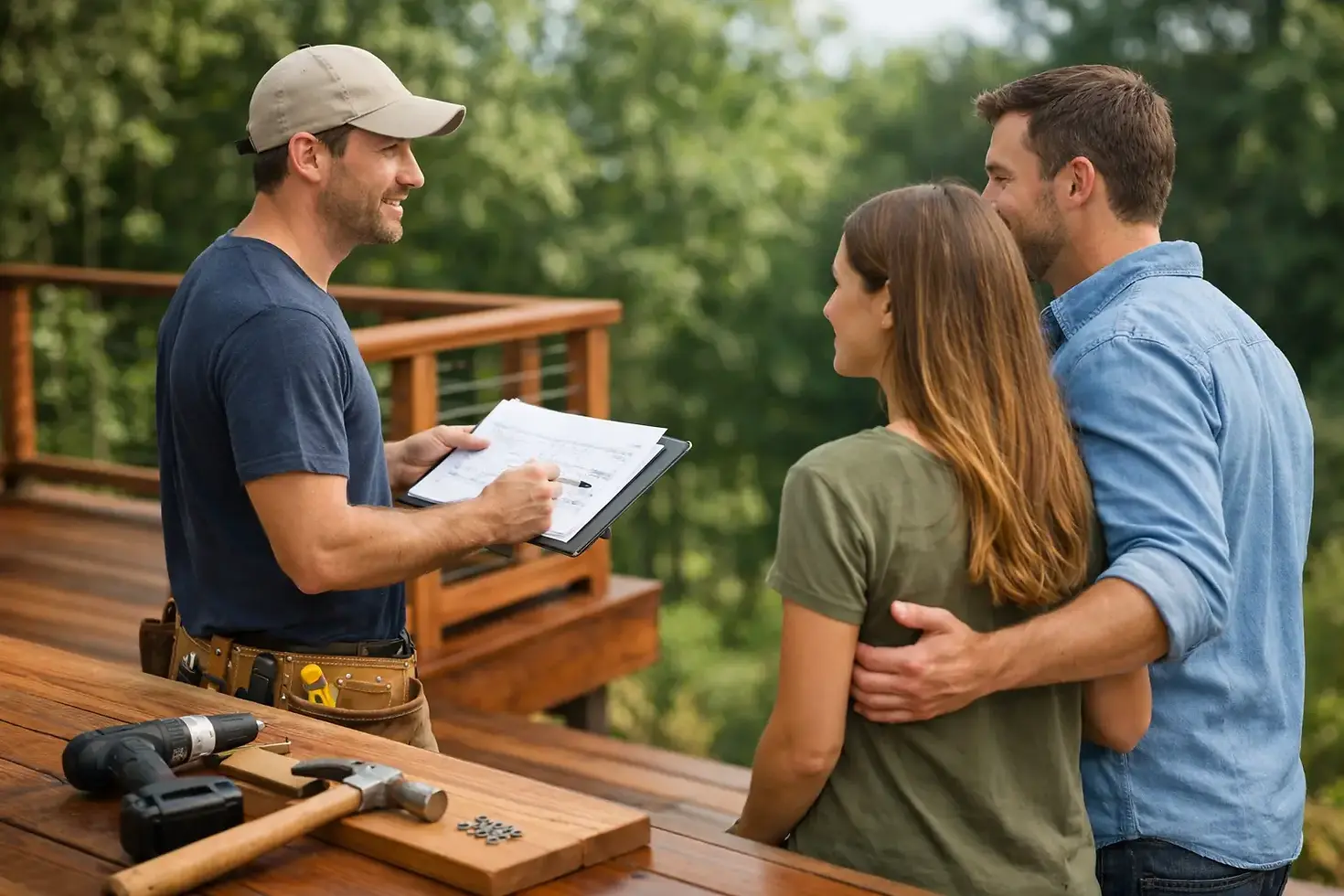
Choosing the Right Hardwood Deck Builder

A deck can look great on handover day and still cause trouble a year later. Boards start cupping, gaps open up where they should not, water sits where it should drain away, and the whole area loses the clean finish you paid for. That is why choosing the right hardwood deck builder matters. The job is not just laying timber. It is getting the structure, spacing, fixing, drainage and detailing right so the deck keeps performing in Melbourne conditions.
For many Preston homeowners, a hardwood deck is about more than appearance. It is a practical way to make the backyard easier to use, create a proper connection from inside to outside, and add value without taking on a full extension. When it is planned and built properly, it gives you a tough, low-fuss outdoor surface that handles family use, entertaining and changing weather far better than a quick cosmetic upgrade.
What a hardwood deck builder should get right
A good deck starts below the surface. Homeowners often focus on board colour, width and pattern first, which is understandable, but the frame, footings and set-out are what decide whether the finish lasts. If the substructure is undersized, poorly aligned or not suited to site conditions, even high-quality hardwood will not save the result.
An experienced hardwood deck builder should be thinking about soil conditions, moisture exposure, ventilation under the deck and how the deck meets the house. That includes checking thresholds, falls, drainage paths and nearby garden beds that may trap moisture. These are the details that separate a tidy-looking deck from one that continues to look and feel solid over time.
Good detailing also matters around edges, steps and transitions. A deck should feel finished, not patched in. Clean lines, consistent board spacing and well-planned step heights make the space safer and easier to use. They also give the whole job a more considered look, which counts when the deck is part of your home’s street appeal or resale value.
Why hardwood is still a strong choice
There is a reason hardwood remains popular for residential decking. It has a natural warmth that composite products often struggle to match, and it suits everything from period homes to modern outdoor areas. It also offers genuine durability when the right species is selected for the site and maintained properly.
That said, hardwood is not a one-size-fits-all option. Different timbers vary in density, movement, grain and colour. Some are better suited to full sun, some handle moisture exposure more reliably, and some need more regular oiling if you want to maintain their original appearance. A practical builder will talk you through those trade-offs rather than pushing a single option on every project.
For some households, the appeal of hardwood is the way it ages. If allowed to weather naturally, many species develop a silvered finish that still looks sharp in the right setting. Others prefer to keep the richer original tone through regular maintenance. Neither approach is wrong, but it helps to know what you are signing up for before the first board goes down.
Working with a hardwood deck builder on design
The best deck layouts are usually the simplest. They match the way the home is used, fit the block properly and avoid awkward level changes or wasted corners. That might mean keeping the deck low and broad for everyday access to the yard, or lifting it to align with internal floor levels for a better indoor-outdoor connection.
A capable hardwood deck builder will look at more than size. Orientation, shade, privacy, access points and future use all affect the final design. If the western sun hits hard in the afternoon, the deck may need to work with a pergola or screening. If there is a tight side setback or sloping ground, the structure may need a different footing and framing approach. If you entertain often, circulation space around seating and doors becomes more important than simply making the deck larger.
It also pays to think about how the deck ties into the rest of the property. Stairs, bench seating, planter edges, privacy screens and cladding details can all help the new work feel like it belongs there. Done well, these additions improve function as much as appearance.
Build quality is in the details you do not always see
Most homeowners can spot obvious defects, but the quality of a deck often comes down to details that stay hidden once the job is complete. The spacing of joists, the alignment of bearers, the quality of fixings and the way moisture is managed all affect how the deck performs.
Fixings are a good example. In the wrong setting, cheap or unsuitable fasteners can stain timber, loosen over time or create maintenance headaches. Properly selected fixings help preserve both structure and finish. The same goes for board spacing. Hardwood moves with temperature and moisture changes, so spacing needs to account for expansion and contraction. Too tight and the boards can bind. Too wide and the finish can look rough and collect debris.
Ventilation is another issue that gets overlooked. Hardwood is durable, but it still needs the chance to dry out. Trapped moisture under the deck can shorten the life of boards and framing, especially in shaded or poorly drained areas. A builder who understands this will plan clearances and drainage properly rather than treating the deck as a flat platform and moving on.
Questions worth asking before you commit
If you are comparing builders, the cheapest quote rarely tells the full story. One quote may allow for stronger framing, better fixings or more careful site preparation, while another may look sharper on price but leave out work that will need sorting later.
It helps to ask how the deck will be framed, what timber species is being proposed, how drainage will be handled and what finish is recommended after installation. You can also ask how the builder deals with movement in hardwood, how they approach deck-to-house junctions, and whether they are allowing for steps, screens or edge trims in the quoted scope.
Clear communication matters as much as technical skill. You want a builder who explains the options plainly, flags issues early and sticks to the agreed scope as closely as possible. Building work around an occupied home is easier when expectations are set properly from the start.
A hardwood deck builder should build for Melbourne conditions
Melbourne weather can be hard on external timber. Hot sun, sudden rain, cool nights and damp winters all put pressure on outdoor structures. That is why local experience counts. A deck that looks fine in theory may need a different approach once you consider drainage patterns, orientation and the specific conditions of the site.
In suburbs like Preston, space can also be tight. Many homes have older layouts, narrow access or existing structures that shape what is possible. A practical builder knows how to work within those constraints without overcomplicating the job. Sometimes that means adjusting board direction to improve flow. Sometimes it means solving a tricky level change between the rear door and the yard. The point is to arrive at a deck that works with the house, not against it.
This is where a hands-on local contractor can make a real difference. Phaeax Build, for example, approaches outdoor carpentry with a strong focus on workmanship, neat finishes and durable results that suit everyday residential use.
Cost matters, but value matters more
Hardwood decking is an investment, and most homeowners want to get it right the first time. A well-built deck can improve liveability straight away and hold its value over the long term. A rushed or underbuilt job tends to cost more in repairs, maintenance and frustration.
That does not mean every project needs the most expensive species or the biggest footprint. In many cases, the best value comes from making sensible decisions on layout, selecting a timber that suits the site, and putting the budget into structure and finishing quality where it counts. A straightforward design built properly will usually outperform a flashy design with corners cut underneath.
If you are planning a new outdoor area, take the time to choose a builder who treats the job as part of the home, not just an add-on. A hardwood deck should feel solid underfoot, look right from every angle and keep doing its job long after the tools are packed away.


Comments